Table of Contents
ToggleRoaches aren’t just unsettling, they’re persistent, disease-carrying pests that thrive in hidden cracks and crevices. Choosing the wrong product means wasting time and money while the infestation spreads. The right roach killer targets the colony, not just the bugs you see, delivering long-lasting results instead of temporary relief. Whether dealing with a few scouts in the kitchen or a full-blown basement invasion, understanding how different products work is the difference between a quick win and a losing battle. This guide breaks down the top roach killers of 2026, how to deploy them correctly, and when to call in a pro.
Key Takeaways
- The best home roach killer targets the entire colony, not just visible adults—gel baits like Advion work by spreading poison through the nest as infected roaches return to their harborage areas, achieving full colony collapse in 7–10 days.
- Gel baits provide long-term control lasting up to two weeks per application, while contact sprays like Ortho Home Defense offer immediate knockdown but require barrier maintenance every 12 months for lasting protection.
- Effective roach control combines the right product with sanitation: eliminating food sources, water, and shelter makes even marginal products work better, as professionals know cleaning accounts for 50% of successful elimination.
- Apply gel bait on Day 1 followed by barrier sprays 2–3 days later at least 6 inches away from bait placements, then maintain monthly spray refreshes and bi-weekly bait reapplication until activity stops completely.
- For light infestations, boric acid mixed with sugar and flour offers a cost-effective non-synthetic alternative, but moderate-to-severe infestations with 10–15+ roaches per night require professional pest control intervention.
- Prevent future infestations by sealing gaps as small as 1/16 inch around pipes and baseboards, fixing moisture problems to reduce water sources, and inspecting incoming cardboard boxes for roach egg cases before bringing them inside.
Why Choosing the Right Roach Killer Matters for Your Home
Roaches reproduce fast, a single German cockroach female can produce 30,000 offspring in a year. Surface sprays might kill visible adults, but they won’t touch the nymphs and eggs hidden behind your refrigerator or inside wall voids. The wrong approach just scatters the colony, making the problem worse.
Effective roach control requires products that eliminate the colony, not just individual bugs. Gel baits and insect growth regulators (IGRs) spread through the nest as roaches consume the bait and return to their harborage areas. Contact sprays offer immediate knockdown but lack residual colony control.
Safety matters, too. Homes with kids, pets, or food prep areas need low-toxicity formulations that won’t contaminate surfaces or air quality. Pyrethroids are common in sprays but can trigger respiratory issues in poorly ventilated spaces. Always check active ingredients and application zones before buying.
Cost isn’t just the sticker price, it’s cost per application and how long the product remains effective. A $15 gel bait syringe that lasts six months beats a $8 spray can that needs weekly reapplication. Factor in coverage area, active ingredient concentration, and whether the product addresses egg cases.
Top-Rated Roach Killers: Our Expert Picks
Best Gel Bait for Long-Term Control
Advion Cockroach Gel Bait remains the gold standard for colony elimination. The active ingredient, indoxacarb (0.6%), works as a slow-acting toxin that roaches carry back to the nest. Infected roaches become bait themselves, when they die, other roaches consume the carcasses and spread the poison.
Each 30-gram syringe treats approximately 60-90 placements (pea-sized dots). Apply along baseboards, under sinks, behind appliances, and in cabinet corners. Results appear within 48 hours, with full colony collapse in 7-10 days. The bait remains attractive for up to two weeks before needing reapplication.
Wear nitrile gloves during application, skin oils contaminate the bait and reduce its attractiveness. Place gel in cracks, not on open surfaces where it’ll dry out quickly. Keep out of reach of children and pets: while the toxicity is low, ingestion can cause stomach upset.
Alternatives include Maxforce FC Magnum (fipronil 0.05%), which works faster but costs more per application. For organic-focused homeowners, Harris Diatomaceous Earth offers non-toxic control but requires more frequent application and won’t eliminate hidden colonies as effectively.
Best Spray for Immediate Results
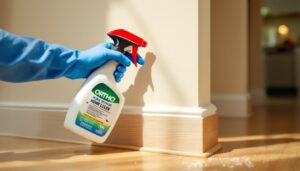
Ortho Home Defense Insect Killer delivers fast knockdown when you need visible roaches gone now. The dual active ingredients, bifenthrin (0.05%) and zeta-cypermethrin (0.0125%), attack the nervous system on contact, causing paralysis and death within minutes.
The 1.33-gallon battery-powered wand covers up to 5,500 square feet and creates a barrier that remains effective for up to 12 months indoors (outdoors, rain and UV degradation reduce this to 3 months). Spray along baseboards, door thresholds, window frames, and pipe penetrations, anywhere roaches enter or travel.
Safety warning: Pyrethroids are toxic to aquatic life and bees. Do not spray near fish tanks, ponds, or flowering plants. Keep pets and children away until surfaces dry completely (typically 2-4 hours). Ventilate treated rooms and avoid spraying on food prep surfaces.
For tight spaces where the wand won’t fit, Raid Ant & Roach Barrier (cypermethrin 0.1%) comes in a standard spray can and works well for spot treatments inside cabinets or behind appliances. It won’t cover large areas efficiently but costs less upfront.
How to Use Roach Killers Effectively in Your Home
Start with sanitation. Roaches need food, water, and shelter, eliminate these and even marginal products work better. Wipe down counters, vacuum crumbs from baseboards, fix leaky faucets, and seal dry goods in airtight containers. Professionals using effective elimination methods know that cleaning is 50% of the battle.
Identify harborage areas before applying products. Check behind refrigerators, under stoves, inside cabinet hinges, around plumbing penetrations, and in basement corners. Roaches prefer warm, humid spaces near food sources. Use a flashlight at night, roaches scatter when lights come on, revealing their travel routes.
Application sequence matters:
- Day 1: Apply gel bait in 10-15 placements per infested room. Focus on corners, cracks, and areas where you’ve seen droppings (small black specks resembling ground pepper).
- Day 2-3: Spray barrier treatments along baseboards and entry points, but keep spray at least 6 inches away from gel bait placements, contact insecticides repel roaches from bait stations.
- Week 2: Inspect bait placements. If gel is gone, reapply. If untouched, switch bait formulations, roaches can develop bait aversion to specific attractants.
- Month 1: Maintain barrier sprays monthly: refresh gel bait every 2-4 weeks until activity stops.
Wear safety goggles and a respirator mask (N95 minimum) when applying sprays in enclosed spaces. Pyrethroids and other insecticides can irritate eyes and lungs. Wash hands thoroughly after handling any product, even if gloves were worn.
If you’re seeing more than 10-15 roaches per night, or if activity doesn’t decrease after 3 weeks of treatment, call a licensed pest control operator. Large infestations often have multiple harborage sites, including wall voids and subfloor areas that require professional drilling and injection.
Natural and DIY Roach Killer Alternatives
Boric acid ranks as the most effective non-synthetic option. This naturally occurring mineral damages the roach’s exoskeleton and digestive system. Mix 1 part boric acid powder with 1 part sugar and 2 parts flour to create a homemade bait, or buy pre-formulated tablets like Harris Boric Acid Roach Powder.
Apply a light dusting (barely visible to the eye) in wall voids, under appliances, and inside cabinets. Heavy application causes roaches to avoid the area. Boric acid remains effective indefinitely if kept dry, but it’s toxic if ingested in quantity, not ideal for homes with crawling toddlers or curious pets.
Diatomaceous earth (food-grade) works mechanically, not chemically. The fossilized algae particles cut through the roach’s waxy cuticle, causing dehydration and death over 7-10 days. It’s safe around pets and kids but requires reapplication after cleaning or if it gets wet. Wear a dust mask during application, DE is an irritant if inhaled.
Essential oil sprays (peppermint, eucalyptus, tea tree) repel roaches but don’t kill colonies. They work as a temporary deterrent in low-level infestations or as a preventive measure. Mix 10-15 drops of oil per cup of water in a spray bottle and apply along baseboards. Reapply every 2-3 days.
DIY methods from home organization resources won’t replace professional-grade products in moderate-to-severe infestations, but they’re useful for maintenance after knockdown or in sensitive environments like nurseries. Boric acid plus sanitation can handle light German roach activity: anything beyond that needs stronger chemistry or a pro.
Preventing Future Roach Infestations
Exclusion is cheaper than extermination. Seal entry points with silicone caulk or expanding foam: gaps around pipes, cracks in baseboards, spaces behind outlet covers, and door sweeps with worn rubber. Roaches can squeeze through openings 1/16 inch wide, about the thickness of a dime.
Store firewood at least 20 feet from the house and elevated off the ground. Roaches nest in wood piles and migrate indoors as temperatures drop. Same goes for mulch beds directly against the foundation, maintain a 6-inch gap of gravel or bare soil.
Fix moisture problems immediately. Roaches need water to survive more than food. Repair leaky faucets, condensation on pipes (insulate with foam sleeves), and poor bathroom ventilation. Use a dehumidifier in basements to keep relative humidity below 50%.
Inspect incoming cardboard boxes and grocery bags before bringing them inside. Egg cases (oothecae) look like small brown capsules, about 8mm long, and are often hidden in box folds or bag creases. Flatten and recycle boxes in the garage, not inside the house.
Schedule quarterly inspections of high-risk areas: kitchen, bathrooms, laundry room, and basement. Catching 2-3 roaches early is manageable: waiting until you see dozens means the colony is established. Keep a gel bait syringe and barrier spray on hand for spot treatments between major applications.
For comprehensive home maintenance strategies, integrate pest prevention into your seasonal checklist alongside HVAC filter changes and gutter cleaning. Roaches don’t just appear, they exploit the gaps in your maintenance routine.