Table of Contents
ToggleIf you’re battling ants, spiders, or roaches but share your home with a dog or cat, the question “Is Ortho Home Defense pet safe?” isn’t just curiosity, it’s critical. Ortho Home Defense Max Indoor Insect Barrier is one of the most popular DIY pest control products on the market, known for its long-lasting formula and wide coverage. But its active ingredients, primarily bifenthrin, a synthetic pyrethroid, raise legitimate concerns for pet owners. This guide cuts through the marketing claims and gives homeowners the straight facts: what’s in the product, how it works, when it’s safe for pets, and what precautions you absolutely need to take.
Key Takeaways
- Ortho Home Defense is safe for pets once treated surfaces are completely dry (2-4 hours for dogs, 24 hours for cats), as bifenthrin binds to surfaces and becomes much less bioavailable.
- Keep pets away from treated areas for a minimum of 2-4 hours after application, and never apply Ortho Home Defense to surfaces pets frequently lick, chew, or lie on like beds and food bowls.
- Cats are significantly more sensitive to pyrethroids than dogs because they lack liver enzymes that efficiently break down these compounds, making extended safety periods essential.
- Watch for early signs of pyrethroid exposure including drooling, vomiting, muscle tremors, and agitation—call the ASPCA Animal Poison Control Center (888-426-4435) immediately if symptoms appear.
- Pet-friendly alternatives to Ortho Home Defense include food-grade diatomaceous earth, gel baits, and boric acid products applied in cracks and voids away from pet access.
- Prevention through exclusion, sanitation, and targeted treatments (rather than broad sprays) is the safest approach to pest control in homes with pets.
What Is Ortho Home Defense and How Does It Work?
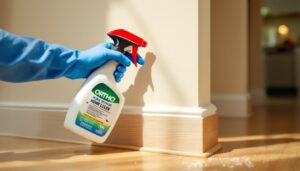
Ortho Home Defense Max Indoor Insect Barrier is a ready-to-use liquid insecticide designed for perimeter pest control. It’s sold in trigger-spray bottles (typically 1 gallon or 1.33 gallons) and marketed for indoor and outdoor use along baseboards, entry points, and foundations.
The active ingredient is bifenthrin (0.05%), a synthetic pyrethroid that disrupts the nervous system of insects. When bugs contact treated surfaces, bifenthrin interferes with sodium channels in nerve cells, causing paralysis and death. It’s effective against ants, cockroaches, spiders, crickets, fleas, ticks, and other common household pests.
One gallon covers approximately 1,500 linear feet of baseboard or foundation, and the manufacturer claims protection lasts up to 12 months indoors and 3 months outdoors. The formula dries clear and doesn’t leave visible residue when applied correctly.
Bifenthrin is widely used in professional and consumer pest control because it’s relatively low-toxicity to mammals compared to older organophosphate insecticides. But, “low toxicity” doesn’t mean “no toxicity,” especially for pets who lick surfaces and groom themselves. Understanding the compound’s behavior is the first step in using it safely around animals.
Is Ortho Home Defense Safe for Pets After It Dries?
According to Ortho’s product label and third-party toxicology data, Ortho Home Defense is considered safe for pets once the treated surface is completely dry. The drying process typically takes 30 minutes to 2 hours, depending on ventilation, humidity, and how heavily the product was applied.
Once dry, the bifenthrin binds to surfaces and becomes much less bioavailable. Pets walking on treated baseboards or floors are exposed to trace amounts, but the risk of acute toxicity is minimal if the product is used as directed. The EPA classifies bifenthrin as a Category II toxicity (moderately toxic) when wet, but significantly lower risk when dry.
That said, cats are more sensitive to pyrethroids than dogs. Cats lack certain liver enzymes (glucuronyl transferases) that break down these compounds efficiently, so even small exposures can cause symptoms in sensitive individuals. Birds, fish, and reptiles are also highly vulnerable and should never be in rooms during application.
How Long Should Pets Stay Away After Application?
Keep pets out of treated areas for a minimum of 2 to 4 hours after application, or until surfaces are completely dry to the touch. For maximum safety, especially with cats or small dogs, wait 24 hours before allowing full access.
Here’s a practical timeline:
- Application time: Remove pets from the room. Close doors or use baby gates.
- Ventilation: Open windows and run fans to accelerate drying.
- Touch test: After 2 hours, touch the treated baseboard. It should feel completely dry, not tacky or damp.
- Re-entry: For dogs, 2-4 hours is generally safe. For cats, especially those who obsessively groom or are senior/ill, wait the full 24 hours.
Never apply Ortho Home Defense to surfaces pets frequently lick or chew, such as pet beds, food bowls, toys, or scratching posts. Avoid treating carpets or rugs where pets lie down regularly.
Safety Precautions When Using Ortho Home Defense Around Pets
Using Ortho Home Defense in a pet-friendly home requires more than just reading the label. Follow these field-tested precautions to minimize risk:
Before application:
- Remove pets, food bowls, water dishes, and toys from the treatment area.
- Cover fish tanks with plastic sheeting and turn off air pumps. Bifenthrin is extremely toxic to aquatic life.
- Store pet bedding in a separate room.
During application:
- Wear nitrile gloves and safety glasses. If spraying in tight spaces, use a respirator rated for organic vapors (not just a dust mask).
- Apply a thin, continuous barrier. Over-application increases drying time and exposure risk.
- Focus on cracks, crevices, and baseboards where bugs travel, not open floor areas.
- Keep the spray nozzle 12 inches from the surface to avoid puddling.
After application:
- Ventilate aggressively. Open windows, use box fans, and run HVAC systems to exhaust fumes.
- Don’t mop or wipe treated surfaces for at least 2 weeks. Cleaning breaks down the insecticide barrier and can re-release active ingredients.
- Wash your hands and any exposed skin thoroughly before handling pets.
- Store the container in a locked garage or shed, never under the kitchen sink where curious pets might access it.
If you’re treating a large area (whole-house perimeter), consider boarding pets for 24-48 hours. It’s not overkill, it’s smart risk management, especially for households with multiple pest control needs.
Signs of Pesticide Exposure in Pets and What to Do
Even with precautions, accidental exposure can happen. Knowing the symptoms of pyrethroid poisoning can save your pet’s life.
Common signs in dogs and cats:
- Drooling or excessive salivation (often the first symptom)
- Vomiting or diarrhea
- Muscle tremors or twitching, especially in the face and ears
- Agitation, hyperactivity, or disorientation
- Dilated pupils and sensitivity to light
- Seizures (in severe cases)
- Lethargy or difficulty walking
Cats may also exhibit ear flicking, pawing at the face, or incessant grooming of a contaminated area.
Immediate action steps:
- Remove the pet from the treated area immediately.
- If the pet has wet product on fur or paws, wash with mild dish soap and lukewarm water. Avoid cold water, which can worsen tremors.
- Do not induce vomiting unless directed by a veterinarian.
- Call your vet or the ASPCA Animal Poison Control Center (888-426-4435) immediately. Have the product label handy.
- Monitor breathing and heart rate. If seizures occur, keep the pet safe from injury but don’t restrain.
Most cases of mild exposure resolve with supportive care (fluids, activated charcoal, anti-nausea meds). Severe cases may require hospitalization and IV treatment. Early intervention is key, don’t wait to “see if it gets better.”
Pet-Friendly Alternatives to Ortho Home Defense
If the risks of bifenthrin outweigh the benefits in your household, several alternatives offer effective pest control with lower toxicity profiles.
Diatomaceous earth (food-grade):
A mechanical insecticide made from fossilized algae. It damages insect exoskeletons but is non-toxic to mammals. Apply a thin dust along baseboards and entry points. Wear a dust mask during application: it’s safe for pets once settled.
Boric acid products:
Effective for roaches and ants. Less toxic than pyrethroids but still requires careful placement. Apply inside wall voids and under appliances, never on open surfaces. Keep pets away until the powder settles.
Essential oil-based sprays:
Products with peppermint, clove, or cedarwood oil repel pests but don’t kill on contact. They’re safer for pets but require frequent reapplication (every 1-2 weeks). Best used for prevention, not active infestations.
Insect growth regulators (IGRs):
Compounds like nylar or methoprene disrupt insect reproduction without affecting mammals. Often combined with low-dose insecticides for integrated pest management.
Professional options:
Licensed pest control operators have access to targeted treatments (gel baits, granular bait stations, exterior-only barriers) that minimize indoor exposure. Many pros now offer “green” or low-toxicity programs designed for homes with pets and children.
For general home maintenance strategies that reduce pest pressure, caulking gaps, fixing leaky pipes, cleaning up food debris, check comprehensive homeowner resources that cover integrated approaches.
Best Practices for DIY Pest Control in Pet-Friendly Homes
Effective pest management in a pet-friendly home starts long before you reach for a spray bottle. These strategies reduce reliance on chemical treatments and keep everyone safer.
1. Exclusion and sanitation:
- Seal cracks and gaps around windows, doors, and foundation penetrations with silicone caulk or expanding foam.
- Install door sweeps on exterior doors (a 1/4-inch gap is an open invitation to ants and roaches).
- Fix leaky pipes and faucets. Most pests need water to survive.
- Store pet food in airtight containers (metal or heavy plastic, not bags). Clean bowls daily and don’t leave food out overnight.
2. Targeted treatments over broad sprays:
- Use gel baits (like Advion or Maxforce) inside cabinets and behind appliances. Pets can’t access gel applied in cracks.
- Deploy bait stations with childproof and pet-resistant designs (like Terro Ant Baits or Raid Roach Baits).
- Apply insecticides only where pests travel, not across entire floors.
3. Exterior barriers:
- Treat the foundation perimeter outdoors, 3-6 feet from the house. This intercepts pests before they come inside.
- Keep mulch, firewood, and debris at least 12 inches from the foundation.
- Trim shrubs and tree branches that touch the house.
4. Monitor and adapt:
- Use sticky traps (non-toxic) to identify pest hotspots before treating.
- Rotate products if pests develop resistance. Many home improvement resources detail seasonal pest behavior and timing.
- Re-evaluate after 4-6 weeks. If the problem persists, it’s time to call a pro.
5. Document and disclose:
- Keep a log of what you applied, where, and when. If your pet shows symptoms, your vet needs this information.
- If you’re renting, check your lease. Some landlords prohibit tenants from applying pesticides.
Remember: the safest pesticide is the one you don’t need to use. Invest time in prevention, and you’ll spend less time managing chemical exposures and vet visits.