Table of Contents
ToggleWhen bugs invade your home, you want them gone fast. But if you share your space with pets, that quick fix gets more complicated. Ortho Home Defense is one of the most popular insect barriers on the market, but the question homeowners ask most is whether it’s safe to use around dogs, cats, and other household animals. The answer isn’t a simple yes or no. It depends on how it’s applied, how long pets are kept away, and whether the product is fully dry. This guide breaks down the active ingredients, safety protocols, and practical steps to protect your pets while keeping pests out.
Key Takeaways
- Ortho Home Defense is safe for pets once treated surfaces are completely dry, typically 30 minutes to 2 hours, but wet pesticide poses significant risk through paw absorption and ingestion.
- The product contains bifenthrin (0.05%), a synthetic pyrethroid that’s less toxic to mammals than insects, but cats are especially vulnerable because they groom constantly and lack certain liver enzymes for detoxification.
- Remove pets entirely before applying Ortho Home Defense, keep them away until surfaces dry completely, and watch for symptoms like excessive drooling, lethargy, vomiting, or tremors that indicate exposure.
- Pet-friendly alternatives like food-grade diatomaceous earth, boric acid powder in sealed areas, gel baits, and Integrated Pest Management offer lower-risk pest control options for homes with animals.
- Use Ortho Home Defense strategically by treating only high-traffic pest entry points rather than entire baseboards, ventilate aggressively with fans and open windows, and store the concentrated formula securely away from pets.
Understanding Ortho Home Defense and Its Active Ingredients
Ortho Home Defense Max Indoor Insect Barrier uses bifenthrin as its primary active ingredient, a synthetic pyrethroid that targets the nervous systems of insects. Pyrethroids are designed to mimic natural pyrethrins found in chrysanthemum flowers, but they’re far more potent and longer-lasting.
Bifenthrin concentration in the ready-to-use formula is typically 0.05%, which sounds low but is effective enough to kill ants, spiders, roaches, and other crawling insects on contact and create a residual barrier that lasts for months. The remaining 99.95% consists of inert ingredients, mostly water and surfactants that help the pesticide stick to surfaces.
For mammals, including pets, bifenthrin is less toxic than it is for insects because of differences in nervous system structure. But “less toxic” doesn’t mean “harmless.” The EPA classifies bifenthrin as a Class C carcinogen (possible human carcinogen) and notes that it can cause mild to moderate toxicity in pets if ingested or absorbed in significant amounts.
Ortho also manufactures variations like Home Defense Outdoor Perimeter, which uses similar active ingredients but at different concentrations. Always check the product label, formulas for outdoor use may contain higher concentrations or additional chemicals not intended for indoor application.
Is Ortho Home Defense Safe for Pets After It Dries?
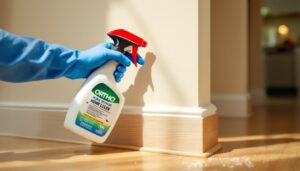
According to Ortho’s product label and manufacturer guidelines, Ortho Home Defense is safe for pets once the treated surface is completely dry. This is the critical point: wet pesticide is far more hazardous than a dried residue.
When the spray is wet, pets can absorb bifenthrin through their paw pads, ingest it by licking treated areas, or inhale droplets suspended in the air. Cats are especially vulnerable because they groom constantly and lack certain liver enzymes that help metabolize pyrethroid compounds. Dogs tend to be more tolerant, but smaller breeds and puppies are at higher risk due to their body weight and tendency to lick floors and baseboards.
Once dry, the pesticide binds to surfaces and becomes significantly less bioavailable. The risk of exposure drops dramatically, though it doesn’t disappear entirely. Heavy-duty pesticide products like Ortho Home Defense are designed to create a long-lasting barrier, which means trace amounts remain active for weeks.
If your pet has a habit of chewing baseboards, licking floors, or eating non-food items (a condition called pica), the dried residue still poses a concern. In those cases, you’ll want to apply the product in areas your pet can’t access or consider alternative methods.
Ventilation also plays a role. Even after drying, some VOCs (volatile organic compounds) may linger in the air for a few hours, especially in enclosed spaces. Open windows and run fans to accelerate drying and reduce airborne exposure.
Safety Precautions When Applying Ortho Home Defense Around Pets
Application isn’t complicated, but skipping the safety steps is where most problems happen. Here’s how to do it right:
Before you spray:
- Remove pets from the room or area entirely. This includes fish tanks, bird cages, and reptile enclosures. Cover aquariums with plastic sheeting if they can’t be relocated, pyrethroids are highly toxic to fish and aquatic life.
- Remove pet food bowls, water dishes, toys, and bedding from the treatment area.
- Wear gloves and safety glasses. Bifenthrin can irritate skin and eyes, even at low concentrations.
- Shake the bottle well. The active ingredient can settle.
During application:
- Apply a continuous barrier along baseboards, cracks, and entry points. Hold the nozzle 12 inches from the surface and move steadily, don’t over-saturate.
- Avoid spraying on porous surfaces like unsealed wood or fabric where the pesticide can soak in and take longer to dry.
- Don’t spray near pet bedding, litter boxes, or areas where your pet spends significant time.
After application:
- Leave the treated area undisturbed until fully dry. Drying time depends on humidity and airflow but typically ranges from 30 minutes to 2 hours.
- Wipe down countertops, tables, and any surface that might come into contact with food or pet paws if overspray occurred.
- Dispose of gloves and wash hands thoroughly with soap and water.
How Long to Keep Pets Away After Application
The standard recommendation is to keep pets out of the treated area for at least 30 to 60 minutes, or until surfaces are completely dry to the touch. In high-humidity environments or poorly ventilated rooms, extend that window to 2 to 4 hours.
For extra caution, especially with cats, small dogs, or pets with pre-existing health conditions, many home maintenance guides suggest waiting until the next day before allowing unrestricted access. This gives the product time to fully cure and reduces the chance of accidental exposure.
If you’ve treated an entire floor or multiple rooms, consider keeping pets in a separate area of the house overnight. Use baby gates or closed doors to block off treated zones until you’re confident everything is dry and well-ventilated.
Signs of Pesticide Exposure in Pets and What to Do
If your pet gets into a treated area while it’s still wet, or if they show unusual behavior after application, watch for these symptoms:
Mild to moderate exposure:
- Excessive drooling or foaming at the mouth
- Pawing at the face or mouth
- Vomiting or diarrhea
- Lethargy or unusual drowsiness
- Skin irritation, redness, or itching (especially on paws)
Severe exposure (rare but possible):
- Muscle tremors or twitching
- Difficulty walking or loss of coordination
- Seizures
- Labored breathing
If you notice mild symptoms, rinse the affected area immediately with cool water and mild dish soap. For paw exposure, wash thoroughly between the pads. If your pet ingested the product or shows signs of distress, call your veterinarian or the ASPCA Animal Poison Control Center at (888) 426-4435.
Do not induce vomiting unless directed by a professional. Bring the product label or take a photo of the ingredient list, it helps the vet assess the situation quickly.
Most cases of mild exposure resolve on their own within a few hours, but it’s always better to err on the side of caution, especially with cats or small pets.
Pet-Friendly Alternatives to Ortho Home Defense for Pest Control
If you’re uncomfortable using synthetic pyrethroids around pets, there are effective alternatives that pose lower risk:
Diatomaceous earth (food-grade): A fine powder made from fossilized algae. It damages the exoskeletons of insects, causing dehydration. Safe for pets and humans, though it can be messy. Apply along baseboards and entry points: reapply after vacuuming.
Boric acid powder: Works well for roaches and ants. Low toxicity to mammals but should still be kept out of reach. Apply in thin layers in cracks and crevices where pets can’t access it.
Essential oil sprays (peppermint, cedarwood, clove): These repel insects but don’t kill on contact. They’re less effective than chemical barriers and require frequent reapplication. Be cautious with cats, some essential oils are toxic to them.
Gel baits and enclosed bait stations: Products like Advion or Terro use attractants and slow-acting poisons sealed inside tamper-resistant stations. Pets can’t access the bait, and it targets specific pests like ants or roaches.
Integrated Pest Management (IPM): Combine physical exclusion (sealing cracks, fixing screens), sanitation (removing food sources), and targeted treatments only where needed. This reduces reliance on chemical sprays and is often more effective long-term.
For serious infestations, termites, bed bugs, carpenter ants, hire a licensed exterminator. Professionals can assess the situation, use lower-risk application methods, and follow protocols that minimize pet exposure.
Best Practices for Using Ortho Home Defense in Pet-Friendly Homes
You can use Ortho Home Defense safely if you follow a few key rules:
Treat strategically, not broadly. Don’t spray every baseboard in the house. Focus on high-traffic pest areas: around doors, windows, plumbing penetrations, and known entry points. The less you apply, the lower the risk.
Create physical barriers. After treatment, place pet beds, food bowls, and litter boxes well away from treated baseboards. If you have crawling pets (like ferrets or small dogs), use furniture or baby gates to keep them off freshly treated floors.
Ventilate aggressively. Open windows, run ceiling fans, and use box fans to push air out of the room. This speeds drying and clears out any airborne particles.
Store the product securely. Keep Ortho Home Defense in a locked cabinet or high shelf, out of reach of pets and children. The concentrated formula is far more dangerous than the dried residue.
Reapply only as needed. Ortho claims up to 12 months of protection, but in reality, effectiveness drops after 2 to 3 months, especially in high-moisture areas. Don’t over-treat. Inspect periodically and spot-treat only active problem zones.
Document your application. Write down when and where you sprayed. If your pet shows symptoms days later, this helps your vet determine whether exposure is possible.
Consider outdoor-only use. If your pest problem is mostly ants or spiders entering from outside, treat the exterior perimeter instead of indoor baseboards. This keeps the chemical outside your living space and away from pets entirely.
Finally, read the label every time. Formulations change, and home organization and safety tips evolve. What worked last year might not reflect current best practices or updated EPA guidance.