Table of Contents
ToggleBay Area homeowners face a unique challenge: sky-high real estate values meet aging housing stock. With the median home price hovering near $1.4 million and limited inventory, more residents are choosing to upgrade rather than upsize. Whether it’s transforming a cramped 1950s kitchen or adding an accessory dwelling unit (ADU) to maximize property value, remodeling projects require careful planning, realistic budgeting, and an understanding of local building codes. This guide walks through the critical considerations, from cost breakdowns and permit requirements to contractor vetting and high-ROI project selection, so homeowners can tackle renovations with confidence.
Key Takeaways
- Bay Area home remodeling offers a cost-effective alternative to relocating, with projects like kitchen and bathroom updates recovering 60–80% of costs at resale while avoiding six-figure transaction and moving expenses.
- Labor rates in the Bay Area run 25–40% higher than the national average, so expect to budget $60,000–$100,000 for a mid-range kitchen remodel and always secure at least three written bids before committing.
- Permit requirements vary across Bay Area jurisdictions and typically take 4–8 weeks for approval; structural changes, plumbing, electrical work, and fixture relocations always trigger building department review to avoid fines and sale complications.
- Accessory dwelling units (ADUs) represent the highest value-add opportunity, generating $2,500–$4,000 monthly rental income while boosting property value by 20–30%, with streamlined state approval processes simplifying the path.
- Verify contractor credentials through the California CSLB database, demand itemized bids with clear payment milestones, and avoid red flags like large upfront deposits or pressure to start without proper permits and planning.
- Kitchen and bathroom remodels focusing on functional updates—such as induction cooktops, curbless showers, and modern ventilation—consistently deliver better resale value than cosmetic-only upgrades in the competitive Bay Area market.
Why Bay Area Homeowners Are Investing in Remodeling Projects
The Bay Area housing market has created a remodel-or-relocate dilemma. Inventory remains tight across San Francisco, Oakland, San Jose, and surrounding counties, and transaction costs, realtor fees, transfer taxes, moving expenses, easily reach six figures. Many homeowners realize that a $150,000 kitchen and bath overhaul costs less than buying a comparable upgraded home in the same neighborhood.
Remote and hybrid work models have also shifted priorities. Home offices, soundproof Zoom rooms, and outdoor living spaces jumped to the top of wish lists post-2020. Properties built in the mid-century boom often lack open floor plans, modern electrical capacity (think 100-amp panels struggling with EV chargers and induction cooktops), and adequate insulation for Bay Area microclimates.
Finally, California’s ADU-friendly legislation makes it easier to add rentable square footage without major zoning battles. A detached 800-square-foot ADU can generate $2,500–$4,000 per month in rental income while boosting overall property value by 20–30%, depending on neighborhood and finish quality.
Understanding Bay Area Remodeling Costs and Budget Planning
Bay Area labor rates run 25–40% higher than the national average. Expect to pay $85–$150 per hour for licensed electricians and plumbers, while general contractors typically charge 15–25% of total project cost for management and coordination. Material costs add another layer: dimensional lumber, sheet goods, and finish materials all carry regional premiums due to transportation and local demand.
For rough budgeting, mid-range kitchen remodels in the Bay Area start around $60,000–$100,000 for a 150-square-foot space, while full bathroom renovations run $25,000–$50,000. High-end finishes, structural changes (moving walls, adding windows), or outdated plumbing/electrical systems can easily double those figures. Many cost estimators and planning tools offer localized breakdowns based on zip code and project scope.
Here’s a realistic budget breakdown for a typical mid-range project:
- Labor: 40–50% of total budget
- Materials: 30–40%
- Permits and fees: 5–10%
- Contingency: 10–15% (critical in older homes where hidden issues, knob-and-tube wiring, dry rot, asbestos, surface mid-project)
Always secure at least three written bids before committing. Prices fluctuate with material availability, crew scheduling, and seasonal demand. A winter start date might save 10–15% compared to spring and summer peaks.
Navigating Permits and Regulations in Bay Area Cities
Permit requirements vary widely across Bay Area jurisdictions. San Francisco, Berkeley, and Palo Alto enforce strict design review processes, especially in historic districts. Minor cosmetic updates, paint, flooring, cabinet refacing, typically don’t trigger permits, but anything involving structural changes, plumbing, electrical, or gas lines requires building department approval.
Kitchen and bath remodels almost always need permits if you’re moving fixtures, upgrading panels, or altering walls. Expect 4–8 weeks for plan review and approval in most cities, longer if you’re in a seismically sensitive zone or coastal commission territory. Skipping permits risks fines, mandatory tear-outs, and complications during home sales when buyers request documentation.
ADUs have streamlined approval under state law, but local ordinances still dictate setbacks, height limits, and parking requirements. Some cities waive impact fees for ADUs under 750 square feet: others impose sewer connection fees exceeding $20,000. Check your city’s planning department website early in the process.
Key permit triggers:
- Moving or removing walls (especially if load-bearing)
- Adding or relocating plumbing fixtures
- Upgrading electrical panels or adding circuits
- Installing gas appliances or water heaters
- Structural reinforcement (foundation work, new beams)
- Window or door replacements affecting egress
Hiring a licensed contractor ensures permit responsibility shifts to them, though homeowners remain eventually liable. DIYers can pull owner-builder permits but must demonstrate knowledge of code requirements during inspections.
Top Remodeling Projects That Add Value to Bay Area Homes
Not all remodels deliver equal returns. Bay Area buyers prioritize functional updates over cosmetic touches, and certain projects consistently outperform others in resale value and daily livability.
Kitchen Remodels: ROI and Design Trends
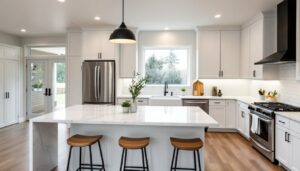
Kitchens remain the highest-impact room. A well-executed remodel typically recoups 60–80% of cost at resale, with minor updates (new countertops, cabinet painting, hardware swaps) delivering better percentage returns than full gut jobs. Current Bay Area trends favor:
- Quartz countertops over granite (lower maintenance, consistent patterning)
- Induction cooktops paired with panel upgrades to support 240V circuits
- Soft-close drawer slides and full-extension hardware
- Open shelving on one wall to break up upper cabinets
- Under-cabinet LED strips for task lighting
If structural changes are in scope, removing a wall between kitchen and dining room creates the open plan buyers expect, but verify it’s not load-bearing before swinging a sledgehammer. Temporary adjustable steel columns (Lally columns) cost $200–$400 and support joists while a structural engineer sizes a permanent LVL beam.
Don’t skimp on ventilation. California code requires range hoods vented to the exterior for gas cooktops, and ducted hoods outperform recirculating models. Plan ductwork routes early: retrofitting through existing framing is messier than new construction.
Bathroom Renovations and ADU Additions
Bathroom remodels offer similar ROI, 65–75% cost recovery, and address common pain points in older Bay Area homes: inadequate lighting, poor ventilation, tiny showers, and outdated tile. Focus on:
- Curbless showers with linear drains (universal design appeals to aging-in-place buyers)
- Heated floors via electric mat systems under tile ($12–$15 per square foot installed)
- Exhaust fans rated for room size (CFM = square footage × 1.1 for bathrooms)
- Waterproofing membranes like RedGard or Kerdi behind all tile (non-negotiable in moisture-prone areas)
ADUs represent the biggest value-add opportunity. A detached 600–1,000-square-foot unit costs $200,000–$400,000 all-in, depending on site conditions, but generates immediate rental income and attracts multigenerational buyers. Many renovation planning resources break down ADU costs by region and finish level. Pre-fab ADU kits (manufactured off-site, craned into place) can shave 20–30% off construction timelines and reduce on-site labor costs.
Utility connections add complexity. If your main panel lacks capacity, a sub-panel and service upgrade run $3,000–$6,000. Sewer laterals may need replacement if original clay pipes can’t handle additional fixtures, expect $8,000–$15,000 for 50–100 feet of trenchless pipe bursting.
Finding and Vetting the Right Remodeling Contractor
Bay Area contractor availability fluctuates with market conditions. When interest rates drop and refinancing surges, quality crews book out 6–12 months. When markets cool, availability improves but some less-capitalized contractors exit the business.
Start with referrals from neighbors who’ve completed similar projects. Online directories and review platforms list top local remodelers, but verify credentials independently:
- Active California contractor license (check CSLB.ca.gov)
- General liability insurance ($1–$2 million minimum)
- Workers’ compensation coverage (required if they have employees)
- References from jobs completed in the last 12 months
Request itemized bids, not lump-sum estimates. You want line items for demolition, framing, electrical, plumbing, drywall, paint, and finish materials. This transparency helps identify padding and makes change orders clearer.
Red flags include:
- Requesting large upfront deposits (California law caps initial payments at $1,000 or 10%, whichever is less, for projects under $500: for larger jobs, never pay more than 10% down or $1,000 upfront)
- No written contract with project timeline and payment schedule
- Unlicensed “handyman” proposing work that requires permits
- Pressure to start immediately without proper approvals
Establish a payment schedule tied to completion milestones, typically 10% down, 25% at rough-in, 25% at drywall, 25% at substantial completion, and 15% final payment after walk-through and permit sign-off. Retain that final percentage until all punch-list items are complete and you’ve received copies of lien releases from subcontractors and material suppliers.
Communication matters as much as craftsmanship. Weekly job-site meetings, photo updates, and prompt responses to questions prevent costly misunderstandings. If a contractor ghosts your calls during the bid phase, imagine the frustration mid-project.
Safety and site management checklist:
- Daily cleanup and debris removal
- Dust barriers (plastic sheeting with zippers) to isolate work zones
- Proper scaffolding and fall protection for exterior work
- GFCI protection on temporary power outlets
- Secure storage for tools and materials
Remodeling disrupts daily life, plan alternate cooking arrangements during kitchen work, and expect dust migration even though barriers. A HEPA-filtered air scrubber ($50–$75 rental per day) drastically improves air quality during demolition and sanding phases. For projects generating lead paint dust (homes built pre-1978), California requires lead-safe work practices and certified renovators.
Finally, budget extra time. Material delays, inspector availability, and weather (yes, even in the Bay Area, winter rains halt exterior work) extend timelines by 20–40%. A three-month kitchen remodel often stretches to four or five. Patience and flexibility keep stress manageable and relationships with contractors intact.