Table of Contents
ToggleMobile homes offer affordable housing, but they often need updates to feel like home. Whether the interior’s stuck in the ’80s or the kitchen layout doesn’t work for modern living, remodeling can transform the space without the cost of site-built renovations. The good news? Mobile home remodeling is typically faster and cheaper than traditional house updates, if you understand the structural differences. Lightweight framing, thinner walls, and manufactured components require different approaches than stick-built construction. This guide walks through planning, budgeting, and executing mobile home renovations that deliver real impact.
Key Takeaways
- Mobile home remodeling is significantly cheaper and faster than traditional house updates, with kitchen remodels averaging $3,000–$8,000 compared to $15,000–$30,000 in site-built homes.
- Strategic mobile home remodeling increases resale value by 10–20% and slows depreciation through updated kitchens, bathrooms, and improved energy efficiency.
- Upgrading insulation, windows, and HVAC systems can cut utility bills by 30–40% annually, making energy-efficient improvements both comfortable and cost-effective.
- Mobile homes use non-standard materials like 2×3 wall studs and vinyl-coated panels (VOG) that require different approaches—consult a structural engineer before removing walls or making major modifications.
- High-impact projects with strong ROI include flooring replacement with luxury vinyl plank ($2–$4 per square foot), kitchen cabinets refacing ($200–$800), and window replacement ($3,000–$6,000 for a typical home).
- Hire licensed professionals for electrical, plumbing, structural, and gas work, but tackle DIY-friendly projects like painting, fixture replacement, and basic flooring to maximize your remodeling budget.
Why Remodel Your Mobile Home?
Remodeling a mobile home makes financial sense for several reasons. First, it’s significantly cheaper than buying a new manufactured home or moving to site-built housing. Second, it increases resale value, updated kitchens and bathrooms can raise appraisal values by 10-20% in many markets. Third, it improves livability for owners planning to stay long-term.
Mobile homes depreciate differently than traditional houses. While land appreciates, the structure itself loses value unless properly maintained and updated. Strategic remodeling slows depreciation and, in some cases, reverses it. Communities with strict upkeep standards especially benefit from visible improvements.
Another practical reason: energy efficiency. Older mobile homes (pre-1976, before HUD code standards) have minimal insulation and single-pane windows. Upgrading insulation, windows, and HVAC systems cuts utility bills dramatically, often by 30-40% annually. Even newer models benefit from improved weatherization and modern appliances.
Finally, there’s the comfort factor. Mobile homes average 600-1,300 square feet. Every wasted inch matters. Reconfiguring a cramped bathroom or opening up a dark kitchen directly improves daily living. Unlike cosmetic Pinterest projects, these changes solve real problems.
Planning Your Mobile Home Renovation
Planning starts with understanding what you’re working with. Mobile homes use 2×3 wall studs instead of 2x4s or 2x6s found in site-built homes. This limits options for running new plumbing or electrical without creative routing. Floor joists are typically 2x6s on 24-inch centers, not 16-inch, which affects how much weight additions can handle.
Check whether structural walls can be removed. In mobile homes, many interior walls are load-bearing, supporting the marriage beam (the main structural beam running lengthwise) or roof trusses. Removing the wrong wall can cause sagging or worse. When in doubt, consult a structural engineer familiar with manufactured housing, about $300-$500 for a site visit and assessment.
Permits depend on scope and jurisdiction. Cosmetic work (paint, flooring, cabinets) rarely requires permits. Electrical, plumbing, or structural changes usually do, even in mobile homes. Some municipalities treat mobile homes under different codes than site-built structures. Call the local building department before tearing into walls.
Measure everything twice. Mobile homes aren’t always square. Walls may bow slightly: floors may not be perfectly level. Standard cabinets and prefab components sometimes need shimming or custom trimming. Build in extra time and a few extra materials for adjustments.
Setting a Realistic Budget
Budgeting for mobile home remodeling differs from traditional renovations. Materials costs stay similar, but labor often runs lower because of smaller square footage. A full kitchen remodel in a mobile home averages $3,000-$8,000 for DIY or budget contractor work, compared to $15,000-$30,000 in a site-built house.
Break the budget into categories: materials (50-60%), labor if hiring out (30-40%), permits and fees (5-10%), and contingency (10-15%). The contingency matters, mobile homes hide surprises like rotted subfloors, outdated wiring, or jury-rigged plumbing from previous owners.
Prioritize projects by ROI and necessity. Fix structural or safety issues first: leaking roofs, failing HVAC, electrical hazards. Then tackle high-impact cosmetic upgrades like kitchens and bathrooms. Paint and flooring come last, they’re easy to DIY and stretch dollars.
Financing options include personal savings, home equity loans (if you own the land), or specialized mobile home improvement loans. Some lenders won’t finance mobile home renovations unless the home is on owned land with a permanent foundation, so check terms carefully. Credit unions often have better rates than big banks for manufactured housing.
Best Mobile Home Remodeling Projects for Maximum Impact
Some projects deliver outsized returns in mobile homes. Focus on visible, functional improvements that solve layout problems or update dated finishes.
Flooring replacement ranks high. Many mobile homes have worn vinyl or thin carpet over particleboard subflooring. Luxury vinyl plank (LVP) is ideal, it’s durable, water-resistant, and installs as a floating floor without fasteners that might penetrate the subfloor. Budget $2-$4 per square foot for materials. A 1,000-square-foot home runs $2,000-$4,000 in materials, plus 2-3 days of labor for a competent DIYer.
Interior painting transforms spaces cheaply. Mobile home walls are often vinyl-coated panels (VOG) instead of drywall. VOG requires oil-based primer or specialty bonding primers before latex topcoat, or the paint peels. Don’t skip this step. Two coats of quality paint typically need one gallon per 350 square feet. A whole mobile home might need 8-10 gallons total, around $250-$400 in paint.
Window replacement improves energy efficiency and curb appeal. Mobile home windows are non-standard sizes, so order replacements from manufactured housing suppliers, not big-box stores. Vinyl double-pane windows run $150-$300 each installed. Replacing all windows in a typical mobile home costs $3,000-$6,000 but can cut heating and cooling costs significantly.
Kitchen Updates That Add Value
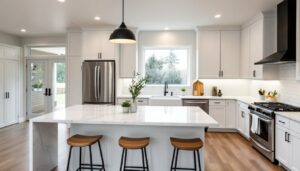
Kitchen remodels offer the best ROI in mobile homes. Start with cabinets. Refacing or painting existing cabinets costs $200-$800 versus $2,000-$5,000 for full replacement. If cabinets are structurally sound, a coat of cabinet-grade paint and new hardware refreshes the look for under $300.
Countertops make a huge visual difference. Laminate is budget-friendly at $10-$30 per square foot installed. Butcher block or prefab granite sections from home centers work in smaller mobile home kitchens. Avoid heavy stone slabs unless you’ve verified the floor can handle the weight, remember those 2×6 joists.
Appliances should be apartment-sized or slim models. Standard 30-inch ranges often fit, but double-check dimensions. Swapping a dated white stove for stainless steel or black stainless updates the look instantly. Budget ranges start around $400-$600.
Backsplash tile adds personality cheaply. Peel-and-stick tile costs $8-$15 per square foot and installs in a weekend. For a more permanent solution, standard subway tile with thinset and grout runs $3-$6 per square foot in materials. A typical mobile home backsplash (15-20 square feet) costs under $200 in materials. Many successful kitchen renovation projects show how smart material choices stretch budgets.
Bathroom Makeovers on a Budget
Bathroom updates rank second for ROI. Mobile home bathrooms are tiny, often 5×8 feet or smaller, so every change shows.
Start with the vanity. A new 24-inch or 30-inch vanity with sink runs $150-$400 at home centers. Install is straightforward if plumbing lines up. If not, flexible PEX supply lines and slip-joint drains offer some adjustment room.
Shower/tub surrounds are common pain points. Old fiberglass units yellow and crack. Replacing a tub/shower combo requires cutting it into pieces to remove through the narrow door and hallway, most mobile home bathrooms won’t fit a one-piece unit through the door after construction. Budget $400-$800 for a new surround kit, plus a full day of demo and installation. Waterproof wall panels (like those from DumaWall or similar) install over existing walls if they’re sound, saving tear-out time.
Toilets are easy upgrades. Comfort-height models with dual-flush mechanisms cost $120-$250 and install in 1-2 hours. Make sure to replace the wax ring and check the flange, mobile home flanges sometimes sit lower than standard.
Flooring matters in wet areas. Avoid laminate: use LVP or ceramic tile. Peel-and-stick vinyl tiles work for tight budgets but won’t last as long. When planning bathroom projects, checking cost estimates from resources like HomeAdvisor helps set realistic expectations.
DIY vs. Hiring Professionals: What You Need to Know
Mobile home remodeling favors DIY work more than site-built renovations, but certain tasks require pros.
DIY-friendly projects include painting, flooring installation (especially floating floors), cabinet refacing, fixture replacement (faucets, lights, toilets), and basic trim work. These don’t require permits and use common tools: drills, saws, levels, tape measures. A motivated DIYer with basic skills can handle most cosmetic updates.
Hire a pro for electrical panel upgrades, HVAC replacement, structural modifications, roof repairs, and major plumbing reroutes. Mobile homes have specific requirements, for example, HUD code mandates certain wire gauges and breaker ratings. An unlicensed homeowner doing electrical work might void insurance or create safety hazards.
Gas line work always requires a licensed professional. Most jurisdictions prohibit homeowner gas work entirely. Same for spray foam insulation in enclosed cavities, it’s a fire code issue and requires certified installers.
When hiring contractors, find ones experienced with manufactured housing. Techniques differ. For example, hanging drywall in a mobile home requires screwing into wall studs that are only 1.5 inches deep, not 3.5 inches. HVAC sizing calculations differ because of lower ceiling heights and different insulation values. Platforms like ImproveNet connect homeowners with contractors familiar with mobile home projects.
Get three quotes minimum. Ask for proof of insurance and references from other mobile home projects. Check reviews carefully, some contractors unfairly price mobile home work higher simply because it’s a mobile home, not due to actual complexity.
For big projects, consider a hybrid approach. A homeowner might demo and prep, then hire a pro for the technical install, then finish with DIY paint and trim. This splits labor costs while ensuring code compliance where it matters.
Safety gear matters. Use safety glasses for any cutting or demolition, respirators (N95 minimum) for sanding or insulation work, gloves for handling materials, and ear protection for power tools. Mobile homes often contain older materials: test for asbestos in flooring, siding, or popcorn ceilings before disturbing them. Professional asbestos testing runs $200-$500 and is worth it for pre-1980s homes.